

After a turbulent year marked by the rapid rollback of 60 years of civil rights gains, answering Dr. Martin Luther King Jr.’s call to action for peace and restorative justice feels more urgent than ever.
In just one year, the Trump administration has dismantled the Department of Education, hollowed out the 1964 Civil Rights Act legislation, and eliminated diversity, equity, and inclusion programs, causing a political and economic blow to Black America.
Adding insult to injury, the Trump administration signed an executive order on January 7, 2026, to withdraw the United States from 66 UN bodies and international organizations, including the United Nations Permanent Forum on People of African Descent (UNPFAD). He claimed that the forum supports unconstitutional and racist policies and pushes for global reparations.
For many in the civil rights community, the move threatens to undermine racial justice efforts both at home and abroad. Other activists see it as recognition of the movement’s global success. Even the African Union has dedicated 2026-2036 as the decade for reparations, calling for debt relief and demanding the return of stolen African crown jewels during the colonial era.
“Since Donald Trump has taken office, he has been essentially ignoring all the work that we have been doing at the UN for people of African descent. And so this announcement doesn’t change anything regarding the US’s involvement. It was at zero before. It’s going to be at zero now,” Professor Justin Hansford stated.
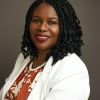
I recently spoke with Professor Justin Hansford, a former permanent member of the UN Permanent Forum on People of African Descent (2021–2024), who is running again for another term. He shared his thoughts on the U.S. pullout and the growing global reparations movement.
Continuing Dr. King’s Legacy and the Call for Reparations
More than 60 years after his historic “I Have a Dream” speech, Dr. King’s words still frame the moral case for reparations.“We have come to our nation’s capital to cash a check,” King declared. In his 1964 book, Why We Can’t Wait, King explained that “no amount of gold could provide an adequate compensation for the exploitation and humiliation of the Negro down through the centuries. Not all the wealth in this affluent society could pay the bill. Yet a price can be placed on unpaid wages.”
From the post-Civil War promise of “40 acres and a mule” to the H.R. 40 reparations study commission, the drumbeat supporting reparations grows louder. However, the Maryland State Legislature’s override of Governor Wes Moore’s veto of a state reparations bill illustrates that the US reparations movement still has a long way to go and lacks political support.
Professor Justin Hansford has been at the helm of the U.S. reparations movement, particularly in advancing reparations cases in cities such as Evanston, Illinois, and Tulsa, Oklahoma. He is also the founder and executive director of the Thurgood Marshall Civil Rights Center and a law professor at Howard University School of Law.
Hansford reflected on his time working with the lawyers of the Tulsa survivors, including Demario Simmons and the late Harvard Law professor Charles Olgestreet, who led legal arguments for reparations. Hansford just founded the Olgestreet Reparative Bar Association in his honor to coordinate legal teams across the United States fighting for reparations.
“Our Black American experience, just like the civil rights protests that happened in the United States in the 20th century, has created a tradition of marching, advocacy, and organizing…[and the use of nonviolence], which..people use all throughout the world, [inspired by Dr. King and Ghandi]” Hansford stressed.
What Is the UN Permanent Forum on People of African Descent?
Under the Biden Administration’s State Department, the United States supported the establishment of “the Permanent Forum on People of African Descent (PFPAD) to improve the safety and quality of life and livelihoods of African descent people globally.”
On August 2, 2021, the UN General Assembly formally operationalized the Permanent Forum through Resolution 75/314. The forum was created as part of the UN’s International Decade for People of African Descent and builds on earlier General Assembly resolutions dating back to 2014. Its first session was held in Geneva in December 2022.
Hansford received over 140 votes out of 200 votes at the UN General Assembly to become a U.S. member of PFPAD. In response to Trump’s pulling the US plug on PFPAD, Hansford went on to stress that “ you can’t fire me if you didn’t hire me. And the US Government is not my employer. It’s an unpaid position. I was elected by the UN General Assembly to serve a term. The UN gave me my mandate, not the United States government.”
During Hansford’s term, one of his first priorities was to “start advocating for reparations. I have been a long-time advocate for reparations for black people in the United States.”
Today, the forum convenes representatives from across Africa, the Caribbean, Latin America, Europe, China, and the United States. Each year, the forum holds public proceedings and produces formal policy recommendations on issues including black maternity health, with over 1000 activists in attendance.
Reparations as a Global Framework for Justice
The modern reparations movement has moved beyond the United States. International definitions and legal frameworks are reshaping the call for justice and reconciliation.
Local U.S. reparations commissions in states such as California and New York now draw from the UN’s definition of reparations: compensation, restitution, guarantees of non-repetition, satisfaction (including apologies and healing processes), and rehabilitation.
Hansford argues that this framework moves the conversation beyond a narrow focus on cash payments toward systemic and holistic repair.
“Where is my check..I want my check,” Hansford said, acknowledging the sentiment of some Black Americans on reparations.
He pointed out that “it was a very financial capitalist-focused discourse..[and] only revolving around slavery. But when we use the UN definition, two things happen. One, you expand the concept to include broad notions of repair. Because at the UN level we always say, …you need to have compensation and you need to ensure that there is restitution. [Two],..we also need to emphasize guarantees of non-repetition, ” Hansford stressed.
Learning From Latin America
Internationally, some countries have advanced further by integrating reparations into national policy.
In Colombia, the first black woman Vice President, Francia Márquez, leads a national reparations commission reflecting the country’s deep government commitment. During the PFPAD session in April 2025, Marquez called on former colonial powers to atone for the past and pay reparations through a global fund, raising eyebrows.
In Brazil—where roughly half the population is Black—President Luiz Inácio Lula da Silva appointed a cabinet-level minister for racial equality, Nelly Floresta, who actively promotes reparations. Brazil recently hosted a march of more than one million Black women demanding reparative justice, drawing inspiration from the 1995 Million Man March in Washington.
These examples, Hansford says, demonstrate how national leadership can dramatically accelerate progress. “So if we’re measuring progress by things like that, the US is not exceptionally ahead of the game,” Hansford pointed out.
By contrast, the United States relies heavily on local activism and municipal commissions. At the federal level, members of the Congressional Black Caucus have struggled to get a House of Representatives vote on the HR. 40 Bill for nearly 40 years.
Hansford emphasizes the need for local mobilization and the humility of learning from global Black communities rather than assuming U.S. leadership. “I’m a proponent of a local, grassroots approach. I actually don’t want us to have a national reparations proclamation without allowing local communities the first opportunity to talk about what happened in their town. Just like in Tulsa you had a discussion around what happened in Black Wall Street and the Greenwood District. That’s something that you [need] locally, ” Hansford explained.
With the 2026 elections around the corner, prioritizing reparations and continuing Dr. King’s legacy may be on the ballot for Black voters.