


Nearly 70 years after the brutal lynching of 14-year-old Emmett Till, the federal government has released thousands of pages of previously sealed records related to his case.
This monumental release, which includes reports, case files, and documents from the Justice Department, FBI, and the U.S. Commission on Civil Rights, sheds new light on the government’s response to the 1955 killing that became a catalyst for the Civil Rights Movement.
The records, now housed in the National Archives, were made public under the Civil Rights Cold Case Records Collection Act of 2018.
This legislation is often referred to as the Emmett Till Act. It is designed to compel the release of records related to unsolved civil rights-era crimes. For decades, the public and historians had only partial access to the details of the investigation. However, this recent release provides an unprecedented look at how federal agencies handled the case.
“Our thoughts are with the Till family,” the National Archives and Records Administration said in a news release.
President Joe Biden honored the Till family
In 2022, President Joe Biden signed a bill named for Till that made lynching a federal hate crime. And in 2023, Biden signed a proclamation establishing a national monument honoring Till and his mother.
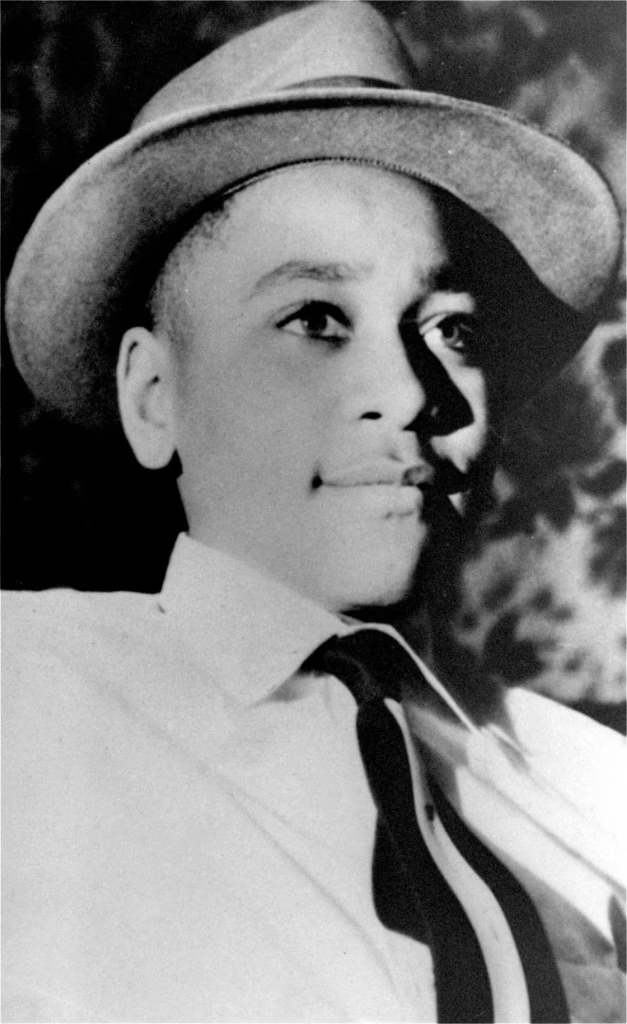
Emmett Till’s story is one of the most harrowing and well-known examples of racial injustice in American history.
A Chicago native, he was visiting relatives in Money, Mississippi, when he was abducted and murdered by two white men, Roy Bryant and J.W. Milam, after he was accused of whistling at a white woman, Carolyn Bryant Donham.
The two men were acquitted by an all-white jury, a verdict that sent shockwaves across the nation and fueled outrage. Their later confession to a magazine reporter further solidified the injustice of the case.
Emmett Till investigation files provide a wealth of information
The newly released records reveal the intricate and often frustrating efforts of federal investigators at the time. They contain a wealth of information, from telegrams and correspondences to internal memos and documents from the NAACP and even FBI Director J. Edgar Hoover. These files detail the challenges faced by law enforcement.
They include the lack of federal jurisdiction for hate crimes in that era. They also include the pervasive fear and intimidation tactics used by white supremacist groups to suppress testimony and evidence.
While the records may not lead to new prosecutions—the original perpetrators are long deceased, and the statute of limitations for many potential charges has expired—their release is significant.
The records provide a more complete historical account of the investigation and the systemic failures that allowed Till’s killers to walk free. This transparency is a crucial step towards acknowledging and confronting the nation’s history of racial violence. It also underscores the enduring importance of his story and the ongoing struggle for civil rights and racial equality.
Records can be viewed in the Civil Rights Cold Case Records Collection on the National Archives and Records Administration website.
The Till family has not commented on the records release.
Nearly 70 years after Emmett Till’s murder, new federal records expose America’s racial injustice. Subscribe to The Black Wall Street Times to ensure this history is told truthfully and fearlessly.