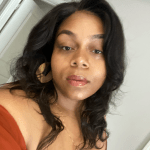
Hollywood star Nia Long’s latest role centers on advocating for small businesses.
The actress and producer recently partnered with Intuit’s Small Business Hero Program to award three local entrepreneurs $20,000 grants, recognizing their impact on the communities they serve.
For Long, the partnership is personal. She grew up watching her grandmother run a beauty salon in Brooklyn, New York, where she witnessed firsthand what it takes to build a business from the ground up. The salon became more than a workplace. It was a hub for community, conversation, and care.
That early exposure to long hours, discipline, and relationship-building shaped Long’s own career, helping establish her as a Hollywood mainstay for more than 35 years.
Backed by Intuit QuickBooks and Mailchimp, the Small Business Hero Program highlights entrepreneurs who demonstrate courage, perseverance, and measurable community impact. Each honoree receives a $20,000 grant along with resources to support continued growth.

On June 30, Long helped present the grants to three small business owners, honoring not just their financial success but the difference they have made in their communities. Each honoree reflects the kind of legacy Long saw in her grandmother’s salon, where a business could become something larger than its four walls.
The Black Wall Street Times spoke with Long about the importance of Black entrepreneurship and why the Small Business Hero Program represents more than a grant. It is a seed sown into lasting legacies.
The Black Wall Street Times: For Black business owners, entrepreneurship represents ownership, legacy, and economic power. Why is it important to keep those values alive through events like Small Business Hero Day?
Nia Long: Because how else do we connect with one another? How else do we build together? It is important for us to know what other business-minded people are inspired to do. This is how you build community—by supporting one another, coming together, and utilizing one another in ways that benefit both businesses.
Small business ownership has long been a path towards independence in Black communities. What does it mean to you to celebrate entrepreneurs who are building for their families and neighborhoods?
NL: There’s a lot of pride in owning something and doing something that no one else is doing. There’s growth, economic development within the community, and you’re inspiring your children to take chances on themselves. There’s just a deep sense of confidence that comes out of that pride.
Many Black founders face barriers around access, funding, visibility, and support. What do you think could change to ensure more entrepreneurs get the resources they deserve?
NL: Keep showing up to events like this, keep having conversations about your needs, and change the way in which we think. If we keep thinking about what we don’t have, we spend less time on what we can build.
Beauty salons are often seen as the heartbeat or safe space of a neighborhood. How did growing up in this environment shape your perspective on the role businesses play in a community’s identity?
NL: I learned everything I needed to learn about being a woman in the hair salon. Number one – you’re there for hours. And shop talk is community, it’s comedy, it’s support, it’s getting information that you may or may not get in your own home. Because women in the hair salon become instant friends, I don’t care where you are in the world. Coming from a family where my grandmother was a hairstylist who came to this country from Trinidad, but was born in Grenada, the first thing she did was start doing hair in our kitchen in Brooklyn.
That eventually led her to open a small salon. She was a small business owner, and I remember she would come home with achy feet, but she would still make us dinner and make sure we were taken care of. My knowledge of her commitment to herself and her business helped me when I got in front of the camera, because I understood hair. When there weren’t people in the hair-and-makeup trailer who looked like me, I was able to take care of myself. We don’t realize how important the building blocks of our journey become until we arrive. That’s where the trust comes in—pay attention to each moment.

What lessons from your own journey connect with the resilience small business owners show every day?
NL: To be patient. To be patient with myself, to be patient with my—my intentions, to take a moment to rest and recalibrate. I make lists, I check them twice, and when I accomplish a goal, I check them off. There’s something very satisfying about making a list —not on your phone, but on a piece of paper —because in the writing there’s energy.
Any final message for Black entrepreneurs building their own version of Black Wall Street?
NL: Keep going. You have to keep going. There is a lane for you, there is a place for you, and there is a purpose for you.